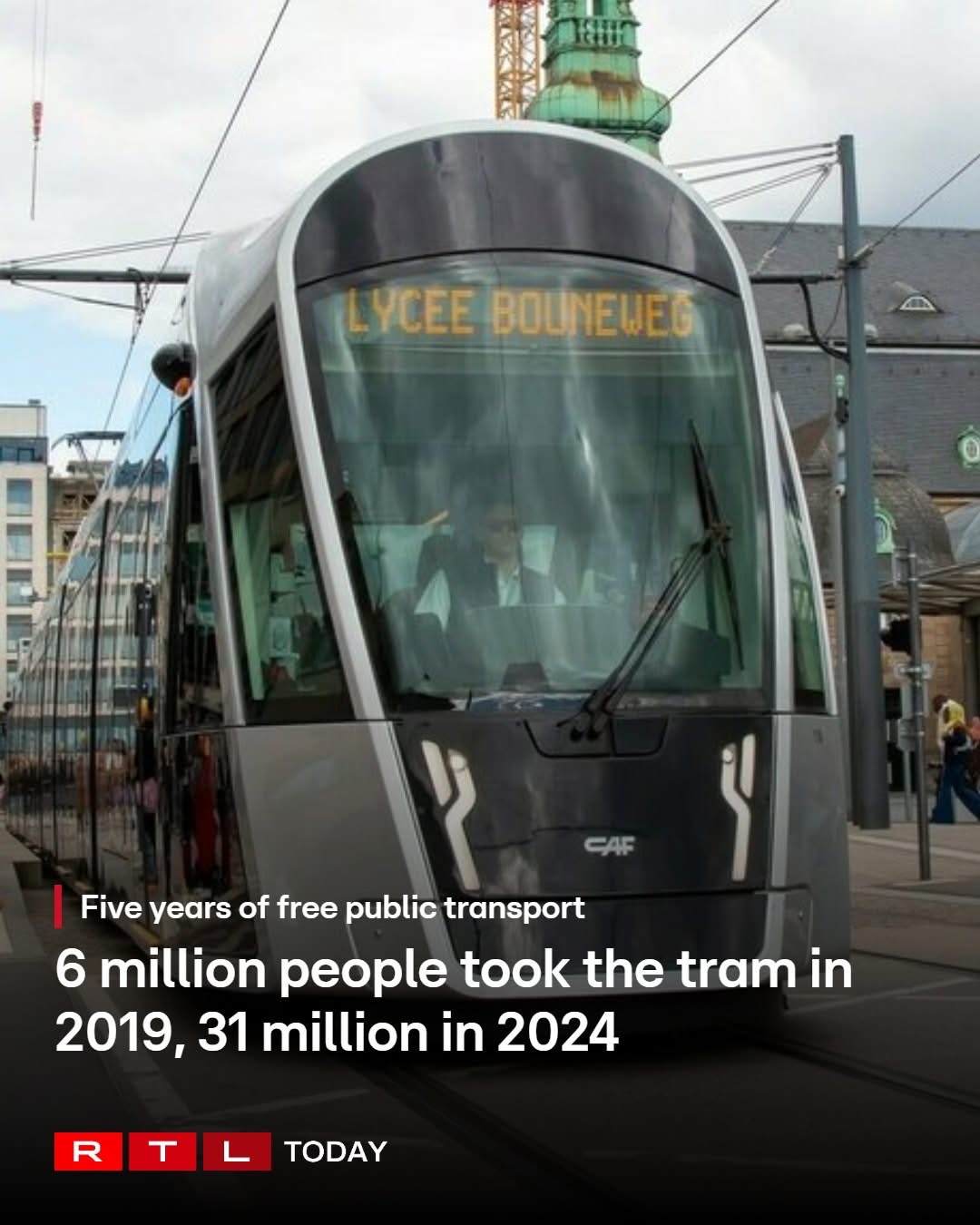
Belgrade is set to offer free public transit for all residents beginning January 1, 2025.
The offer means "no one will have to pay for a ticket anymore," the mayor of the Serbian capital, Aleksandar Sapic, announced on Wednesday.
The city with 1.7 million residents is one of the few major European capitals without an underground system.
But it is not the first in Europe to have made public transport free — with others like Luxembourg and Estonia's Tallinn already having done so.
Belgrade has a high density of cars, with residents facing hours of gridlock as they move about the city.
The number of cars has increased by 250,000 over the past decade, Sapic noted.
Even though authorities have promised a metro system by 2030, the plan has faced many delays that have stalled the project so far.
Sapic also vowed to fully replace the city's fleet of buses, trams and trolleybuses by 2027.
The Belgrade tram system has existed since 1892 and has a total length of 127 kilometers, twisted around the city, making it one of the longest networks in Europe.
rm/jsi (Reuters, AFP)
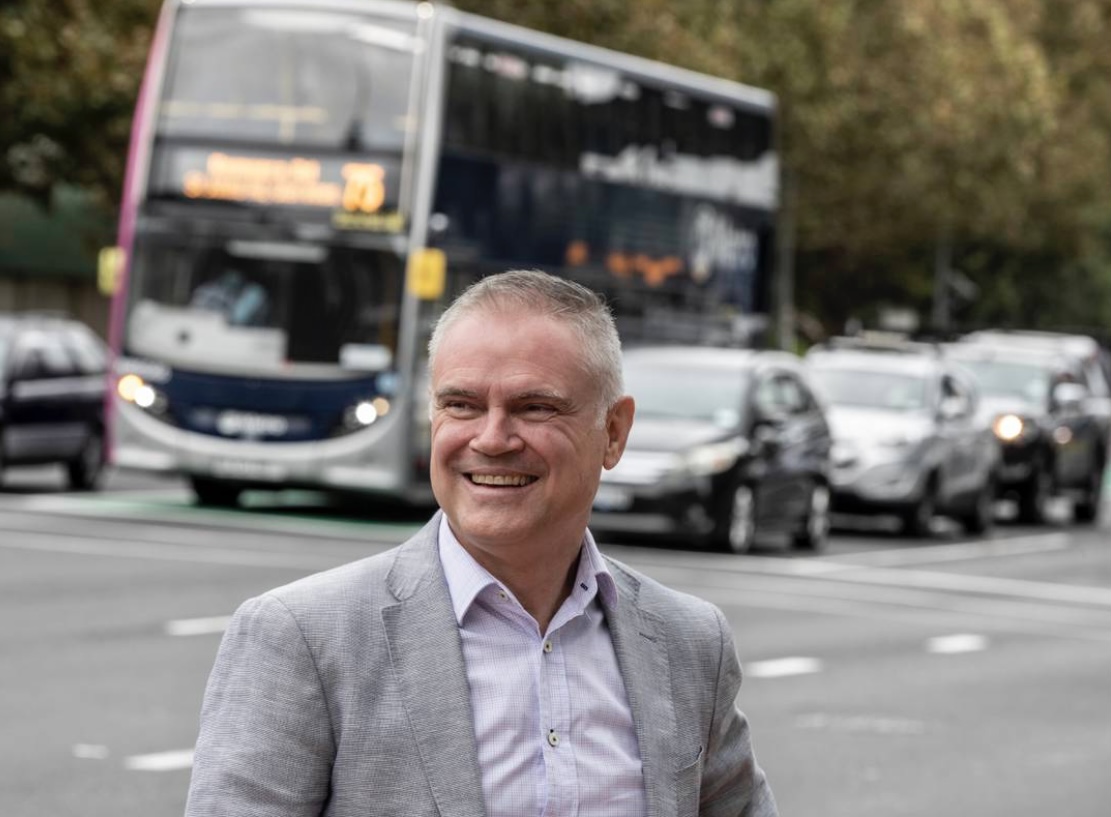
In Simon Wilson’s revealing interview (Weekend Herald, April 22), new Auckland Transport chief Dean Kimpton wonders, “How do we make public transport as much loved as libraries?” Although he correctly identifies many other key ingredients to ending traffic congestion such as “rapid, frequent, safe, clean public transport”, the obvious comparison with libraries that Kimpton overlooks, is to make public transport services free at the point of use.
Roger Fowler,
Fare-Free NZ.
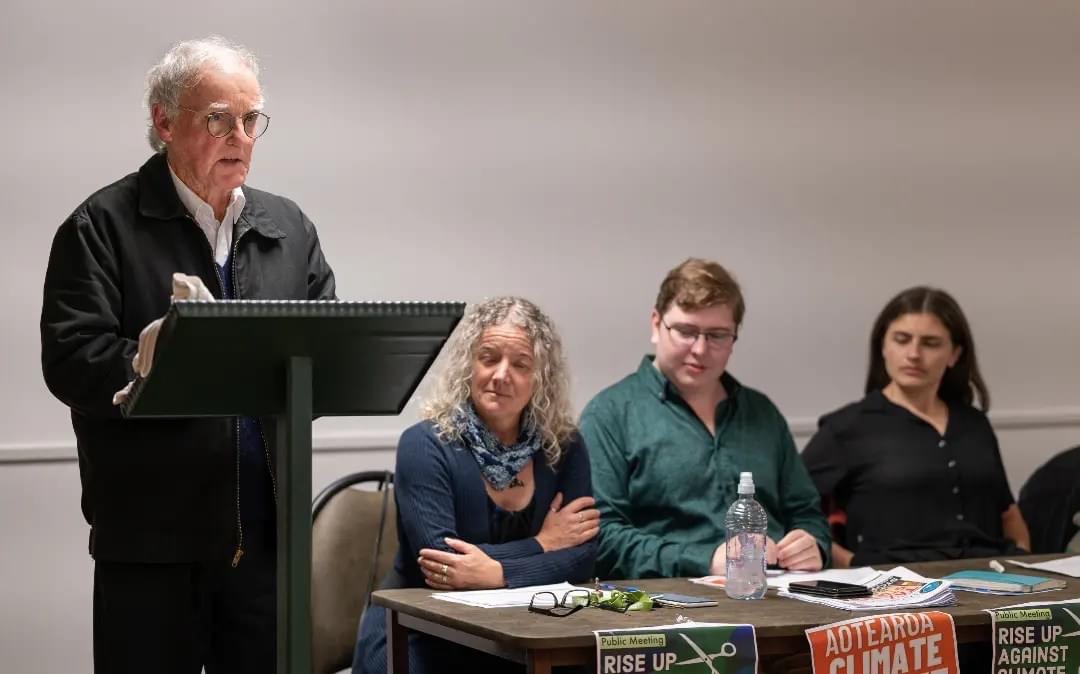
A well-attended ‘Rise Up Against Climate Cuts’ meeting in Auckland on Thursday heard from a range of speakers including GreenPeace climate campaigner Christine Rose, Elliot Crossan from System Change Not Climate Change, Roger Fowler from Fare-Free NZ, Xavier Walsh from Unions Auckland, Takutai Moana Kemp, Te Pati Maori candidate, Joe Carolan for Unite Union, and Green MP Chloe Swarbrick.
Fare-Free NZ spokesperson Roger Fowler said the climate crisis is here now and deadly serious. ‘We need to take this seriously and put the country on a ‘war footing’ to combat climate change.’
Fowler advocated that Free Public Transport can be one effective means to ‘turn around this obsession with cars’ and dramatically cut the number of vehicles, and reduce air pollution and emissions that are a major contributor to global warming.
But it’s not just a matter of zero fares - Free Public Transport will need to have frequent top-quality 24/7 services with an increased fleet of modern zero-emission vehicles, integrated colour-coded routes, free wifi, easy access and ‘Public Transport Ambassadors’ to assist passengers and deter anti-social behaviour - and free up the drivers to focus on their job: getting everyone to where they need to go safely.
To address the shortfall of drivers, Fowler said they need to be respected - ‘treat them like rock stars and pay them like surgeons!’
Funding could start now by diverting the billions of dollars allocated to current and proposed extravagant roading projects, and the ‘National Ticketing System’ (estimated to cost $1.3 billion). Why build more motorways and under-harbour crossings to encourage more traffic when we need to cut traffic volumes?
Other measures should include expanding electrified rail for passengers and freight, boost coastal shipping to get freight off of trucks, expand modern ferry services (also with zero-fares) and upgrade walking, cycling facilities and open public spaces.
Fowler called for building a strong people’s movement to build pressure to demand effective action to combat climate change.
‘We need to make public transport sooo attractive that few people would choose to go by car’ he said.
High quality free and frequent public transport could be that game changer - ‘to dramatically cut traffic congestion, reduce emissions, make roads safer, increase social cohesion, cut travel costs as well as combat climate change.’
By Martyn Bradbury, Daily Blog, August 19, 2022 (Abridged)
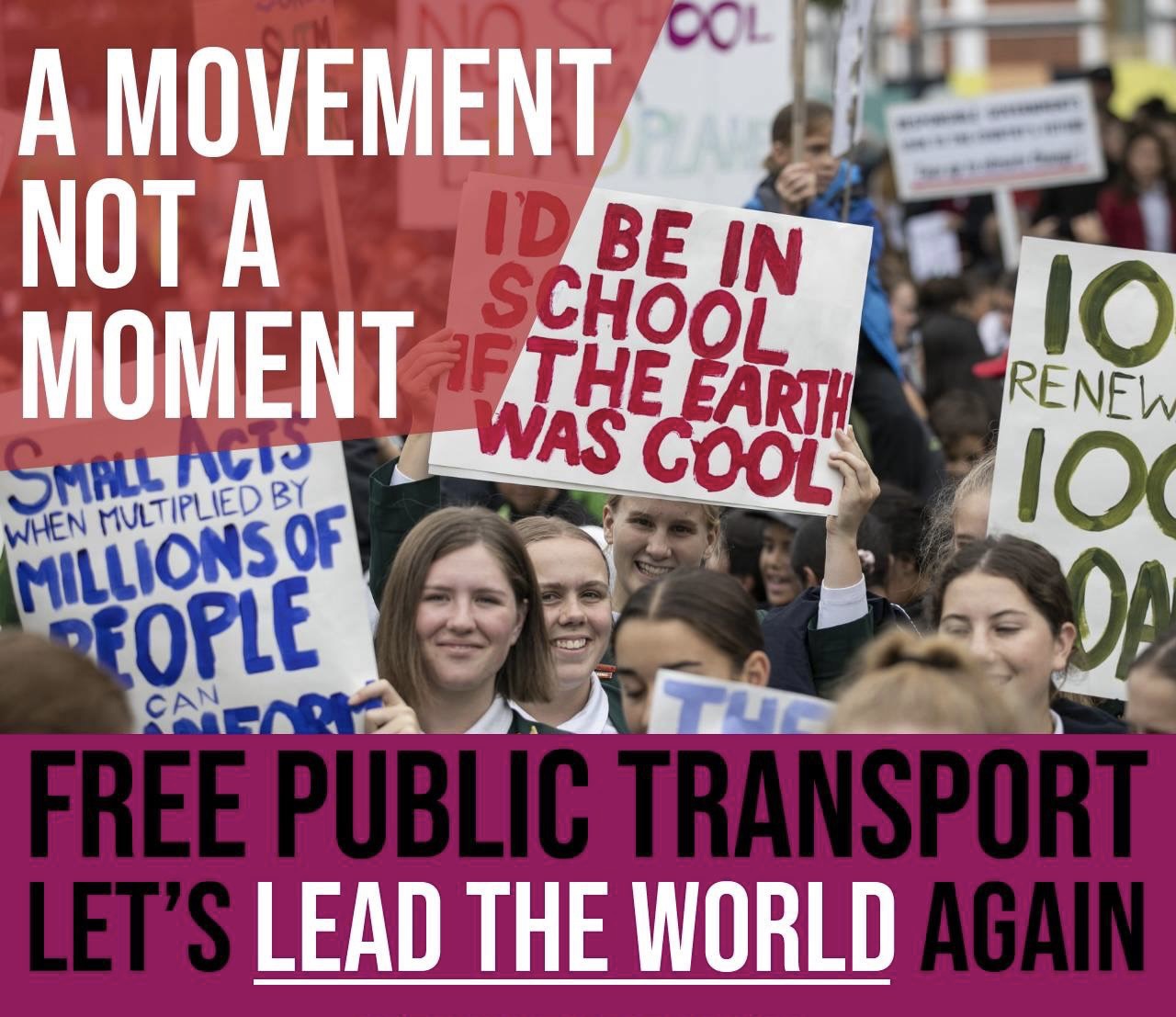
The time for Free Public Transport as a solution to the climate crisis is now.
We urgently need to shift people out of private transport and onto public transport.
This would have an enormous benefit on the poorest amongst us who pay 20% of their wage on transport while taking vast numbers of people off the roads in their cars.
We must nationalise our public transport fleet and look at vast new investment inside cities and intercity.
That includes a vast upgrade on rail.
The Truck industry have had political dominance for too long.
Rather than continue to subside the NZ Trucking Mafia, we should subsidise public transport.
The floods you are seeing, the scorching temperatures, the heat waves – ALL of this is happening at speeds and jumps in temperature far outside where Scientists were expecting.
The climate crisis is here and we aren’t ready.
New China crisis poses fresh global threat as ‘extreme’ disaster unfolds
China is facing its most extreme heatwave in 60 years – and the impact is set to be felt worldwide.
Severe heat and drought has plagued the world’s second-biggest economy for weeks on end, with temperatures soaring above 40C in a string of large cities.
As a result, the unprecedented demand for airconditioning has caused the power grid to buckle, while the drought has also reduced water levels and therefore the ability to generate electricity at hydropower plants.
It’s a nightmare scenario for the nation of 1.4 billion, and has seen some provinces resort to drastic measures.
Free public transport and vast upgrade of that infrastructure is a solution and part of the future’.

Free Fares NZ announcement, 29 July 2022
On Thursday morning, the Local Government New Zealand (LGNZ) Annual General Meeting passed a remit supporting our call for central Government to fund free public transport for under-25’s, tertiary students, Community Services Card Holders, and Total Mobility Card holders and their support people.
Having the largest local government association back our ask is a big moment for our kaupapa.
One of our organisers Mika Hervel says “Free Fares is not a fringe idea. It is not absurd, or even unrealistic. Every day, more and more people are backing our calls to central Government and the support of LGNZ’s remit this morning is indication that this is no longer a partisan issue. The Government should act now.”

By Sandy Smith, NextCity, 27 July 2022
Kansas City, Missouri, made national headlines in the fall of 2019 when its city council voted unanimously to become America’s first large city to make public transportation free citywide. Now, two and a half years later, anyone living anywhere in the city can ride buses without paying a fare.
How has that worked out for the riders and the city?
Survey data shows the move has largely been successful in advancing local transit equity – though it also highlights what remains to be done to allow all Kansas Citians equal access to the sprawling metropolitan area.
A study conducted as part of the Urban League of Greater Kansas City’s annual “State of Black Kansas City” report last year asked 1,686 riders for their feedback on what Zero Fare has enabled them to do. The responses show how a Zero Fare policy makes a big difference in these riders’ ability to exercise the so-called “right to the city.”
Almost 90% of the riders surveyed said they rode the buses more as a result of Zero Fare. About 92% said it allowed them to shop for food more often; 88% said they could see their healthcare providers more easily or more often; 82% said it allowed them to get or keep a job; and 86% said it made them feel like city leadership is concerned about their needs — a sore subject for mostly-Black East Side residents, who often complain that the city pays more attention to its whiter and more affluent west side.
Continue to read - Link to original post: https://nextcity.org/urbanist-news/kansas-city-zero-fare-free-transit-program-shows-major-success?fbclid=IwAR3v5vQjzT3lCsjPGwdoDLqtFIc9odnktK7OPOxSu-w6yN5iVomiMwTgtys
Otago Daily Times, Monday, 25 July 2022
At this early hour, Catherine Herd’s yellow umbrella is a bright, cheerful signal to the approaching bus that passengers are waiting at the suburban Dunedin bus stop.
Most weekday mornings, Herd catches the No 63, Balaclava to Logan Park, from this hilltop stop just around the corner from her Maryhill home to the bottom of inner-city High St. At the end of her working day, the pharmacist then catches it back up the hill.
Like most mornings, the bus is quite full, even compared to pre-Covid times. In recent months, passenger numbers have been boosted by ballooning petrol prices and tumbling bus fares.
Not that the Government-subsidised ticket prices have resulted in Herd taking more trips. Buses have been a key mode of transport since she and her husband returned to the city 11 years ago.
"It’s very convenient. And it’s a conscious choice," Herd says.
"We are trying to be a one-car family, for environmental reasons."
She does, however, appreciate the few extra dollars the half-price fares leave in the weekly family budget.
An extension of the bus fare subsidy would be good, she says. But Herd has not considered a free bus service.
"I haven’t given that much thought. Because I didn’t really think it was ever likely."
This week, Minister of Finance Grant Robertson and Minister of Transport Michael Wood announced a five-month extension to both the 25c fuel tax cut and half price public transport fares.
The measures were first introduced on April 1 as the petroleum price-hiking effects of the Russian invasion of Ukraine began to bite, and extended again in June. The latest announcement seems timed to assuage the blow of this week’s revelation New Zealanders are being hit by inflation of 7.3%, the highest in three decades.
The effect of the reduced petrol tax take has been mixed. Robertson says it has helped keep the cost of delivering goods, and therefore goods themselves, from rising even higher. But Consumer NZ says four out of five New Zealanders are driving less to counter costly fuel prices.
Half-price public bus, train and ferry tickets, in tandem with rising fuel costs, have funnelled more people away from their cars and on to public transport.
Nationwide, passenger numbers plummeted during the first two years of the global Covid-19 pandemic. But they have been recovering since subsidised fares came in. Since April, patronage on buses and trains in the country’s major cities has risen from 49% of pre-Covid levels to 65%.
Otago has fared better, especially Dunedin.
Figures obtained by The Weekend Mix from Otago Regional Council (ORC) show that, in June last year, Queenstown public bus patronage was 64% of pre-Covid levels. By the start of this month, it was up to 75%. Queenstown’s ferry service did not join the public transport fold until after the start of the pandemic, making pre-Covid passenger comparisons difficult.Dunedin, however, seems to have truly embraced public transport. June passenger numbers actually gained ground mid-Covid, and by this month were almost 10% higher than in 2019. There were 221,895 trips on Dunedin buses last month, up from 204,362 two years ago.
Could it be just the beginning?
In a world of increasingly frequent climate-crisis heatwaves and floods, in a country that ranks third in the OECD for obesity, in a society where an increasing number of New Zealanders cannot afford to participate equally ... has the idea of freely available public transport come of age?
Some say no.
Christopher Luxon, leader of the National Party, for example, has said he is not a fan of free public transport.
Asked in April if subsidised fares were something he would like to see extended further, Luxon said he believed services should not be propped up by taxpayers.
"Ultimately, public transport needs to stand on its own feet. It can't be subsidised or underwritten ... it has to be able to build on its own case," Luxon was reported saying.
Others say public transport should not be free because factors other than price, such as reliability and quality of the transport system, are more important considerations for patrons. If buses were free, they ask, where would the money come from to ensure the service was attractive?
Is there no such thing as a free bus? Or, can a case be built for free buses?
The Government already intends to make half-price fares permanent for Community Services cardholders when the current subsidies expire at the end of January, 2023.
Imagine if public transport was made free and plentiful for all. If, anywhere you needed to go around town, at any time until late at night, there was public transport just a short walk away, due in a few minutes, to take you there, at no cost.
The idea has swelling support.From politicians and pointy heads to the hoi polloi, people are saying zero-fares public transport is a good idea.
"I've long believed free public transport should be our goal," Dunedin Mayor Aaron Hawkins says.
He cites the urgent need to shift to zero carbon and the detrimental effects of vehicles on human health. It is also about transport justice, Hawkins adds.
"If we want everyone in our community to be able to access what the city has to offer, we need to make sure they can get around it. Free public transport . . . is a huge asset in terms of equity," he says.
Queenstown Mayor Jim Boult adds qualified approval. Boosting public transport would help climate goals and alleviate traffic congestion, Boult says. He supports free fares if central government picks up the tab.Green Party transport spokeswoman Julie Anne Genter says fare-free transit services would be a win for the environment and people, "to make our cities liveable and equitable".
University of Otago’s head of sustainability Ray O’Brien says a free bus service would certainly help shift more people on to public transport.
"Given the increasing costs of living, anything that can save money for families and students is likely to be a popular option."
Research by urban mobility activists Melissa and Chris Bruntlett, of the Netherlands, who have written about international efforts to increase public transport use, found sociological benefits accrue from life with fewer cars — less stress, greater social contact and an increased sense of wellbeing.
Word of the would-be benefits is trickling down.
A recent survey of Aucklanders has shown most of its residents support free public transport. The poll by First Union and the Public Service Association, released three weeks ago, shows 73% of people support making public transport permanently free. That support is across the political spectrum, with the majority of National and Act supporters polled supporting the idea.
There might be societal, environmental, health and wellbeing benefits on offer. But, Assoc Prof Alex Macmillan asks, what about the economic case for free public transport?In particular, the University of Otago public health physician (whose research interests include transport and urban planning) is interested in the comparative costs and benefits of the government’s "investment" in reduced fuel taxes and its "subsidising" half-price public transport fares.
"The first came with health and environmental harms that weren’t valued, while the second was accompanied by un-measured benefits," Prof Macmillan says.
"What [are] the comparative costs of those two schemes?"
It is astonishing how quickly 25c-a-litre mounts up. By January 31, the 10-month long fuel tax cut will have cost the government $1.174 billion in lost revenue.
Half-price fares, on the other hand, are costing the government $122.7 million, less than one-tenth of the fuel tax cut.
Public transport is already largely funded by the public via the Government from Waka Kotahi’s National Land Transport Fund, which gets most of its money from fuel taxes, road user charges, vehicle registrations and licences. Waka Kotahi’s average annual spend on public transport services and infrastructure is $1.23 billion.
Regional councils and public transport fares provide the remaining funds for the country’s public transport services. Pre-Covid, fares across the motu amounted to about $335 million per year.
Here’s what it all means. If high petrol prices had been allowed to wean people off private transport and the fuel tax money had been spent on making public transport free, that $1.174 billion would have provided cost-free public transport across New Zealand, not for 10 months, but for three and a-half years.
And once buses were electric — the ORC announced this week that a new fleet of electric buses will be operating in Dunedin by the end of 2023 — the lower running costs would mean those dollars went even further.
But Prof Macmillan’s interest in the economic argument comes from a fundamentally different place to many speakers in this space.
The whole way we think about public transport is wrong, and needs to be turned on its head, she says.
First, Prof Macmillan tackles the notion that a price has to be paid because people do not value what is free.
"We know that’s not true. When it comes to public facilities that are free — like libraries, our free health system, and education — people use them and appreciate them."
Public transport is in the same category, Prof Macmillan argues.
"It is a public good.
"There is a right to access to the building blocks of health and wellbeing for everybody. And public transport plays a really crucial part in that."
A paradigm shift is needed, she says.
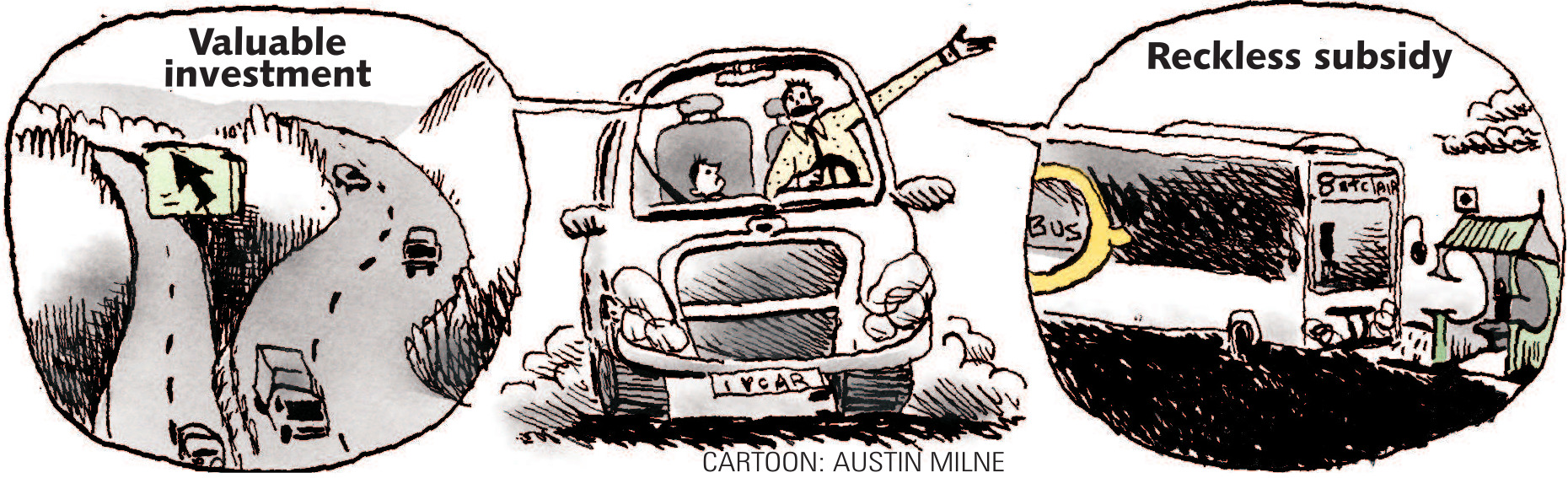
Public transport is viewed as a private enterprise; partially subsidised by the government but required to essentially be a self-sustaining business.
"We really need to move away from that thinking and view it as a public good, just as health and education are viewed as public good."The concern that free fares would reduce the quality and frequency of services is a false dichotomy, Prof Macmillan says.
"We don’t need to have an ‘or’ there. We just need a proper valuing of public transport; an investment that would mean we have both free fares and high quality public transport because that is what’s needed."
Is free public transport about to round the corner?
Not anytime soon, Transport Minister Wood told The Weekend Mix.
While improving public transport is a priority, zero fares would reduce the revenue the government can then spend on public transport, Wood says.
"We believe our current half price approach to deal with shorter-term cost pressures, and permanent support for lower fares for low income households ... is the best and most balanced approach."
It is not unknown, however, for this Government to change direction mid-stream. And, internationally, the tide does does seem to be floating the zero-fares waka.
In 2012, the 420,000 residents of Tallinn, capital of Estonia, voted-in free public transport. Buses are now free in most Estonian counties.
Chengdu city, central China, with a population of 5 million, has 44 all-day, fare-free bus lines and free transport across its network for two hours each morning.
In 2020, Luxembourg became the first country to make all public buses, trams and trains fare-free. Malta will be the second when it introduces zero-fares in October.
So, what would need to change to ensure successful, free public transport services in Aotearoa?
The Green’s Genter says buses, trains and ferries would need to be "frequent, all day and even on weekends, and ... accessible, safe and clean".
This week, the ORC reduced bus services in Dunedin and Queenstown because of an acute, nationwide driver shortage.
Solving this would be crucial to providing that level of service.
Queenstown’s Boult and ORC chairman Andrew Noone both favour achieving that through migrant bus drivers."It is my opinion that Immigration New Zealand needs to provide support to address staffing shortages by increasing the number of visas offered to those looking to make the move to New Zealand," Boult says.
Noone, expressing his own views rather than council policy, adds that "the pay rates will need to be comparable to other similar roles".
The Government recently agreed to "top up" bus drivers’ wages as a stop-gap measure to ensure a living wage, $22.75 an hour, until better solutions can be found.
Bus drivers are expected to be near the head of the queue for redress when Fair Pay Agreement legislation becomes law, probably late this year.
The other issues — frequency, reliability, travel time, quality — would all be addressed by flipping to a "public good" view of public transport, Prof Macmillan says.
"Viewing it as a public good, worthy of investment."
That would include scrapping "fare box recovery"and recalibrating how transport fund priorities are calculated.
Currently, most of the money is spent on roads, which have a high social, health and environmental cost.
Whereas, public and active transport, which Prof Macmillan says have to go hand-in-hand, has a much higher rate of return.
"We know that those investments bring tens of dollars back to government and society for every dollar spent.
"We need to value the costs and benefits properly, to account for those wider well-being, fairness, social and environmental benefits."
Cameron Hassall can see some of that from Stop F at the Dunedin Central City Bus Hub, on Great King St.
It is already dark as the 20-year-old joinery apprentice waits for the No 36 bus that will take him home to his Mornington flat.
He has his driver’s licence but chooses to spend an hour each morning and evening getting two buses to-and-from his workplace in Green Island.
It is cheaper than buying a car and paying for petrol, Hassall says.
He has noticed more people on buses since the fares were halved.
If public transport were free, even his flatmates might start using it, he says.
"It would be cheaper for everyone, there would be less traffic congestion. It’s a great idea."

We are fortunate to live in a beautiful city that's home to vibrant communities, boasts destination parks, beaches, eateries and more. It's a place we call home and one we're proud of. But its traffic problems are crippling our productivity and choking the joy out of our city.
That's why my plan for better and more accessible public transport is a plan that puts the future of Auckland first.
My five-point plan includes:
- fares free public transport
- an expanded and more frequent network
- support for electric ferries and integration of ferries into the network
- rolling out Auckland Transport’s parking strategy equitably
- ensuring two councillors sit on Auckland Transport's board so Auckland Council’s vision for a better connected city can be realised.

Waatea News, 11 July 2022
A south Auckland councillor is backing a plan by fellow councillor and mayoral candidate Efeso Collins for free public transport.
Manurewa-Papakura Ward councillor Angela Dalton says she’s also on a council working group looking at a reduction of transport emissions.
Free buses and trains would help with that goal.
“It will provide more equity for people as long as – the other thing we need to do is make sure those buses are running, are frequent, and in the place they need to be – so I think Efeso is on the right track and It can be funded I believe from within existing budgets because there are things we would just stop doing if we had free public transport,” Ms Dalton says.
More people using public transport means less pressure on road surfaces so they don’t need to be renewed as often.
In findings which have startled scientists, new data shows car pollution is killing thousands of New Zealanders each year and costing the country billions of dollars.
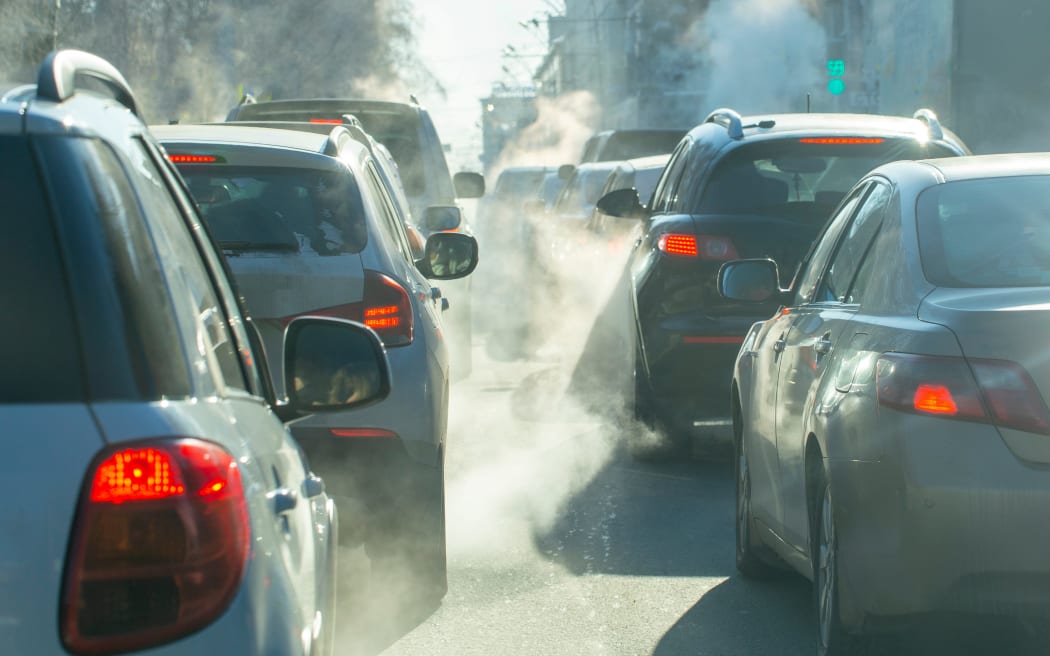
Photo: 123RF
The first-of-its-kind study has measured the health impacts of nitrogen dioxide, a toxic gas emitted by fossil fuel cars.
It found 3300 people were dying yearly because of air pollution, and it was mostly because of cars.
That meant as a whole, 10 percent of the people who died each year in the country were dying because of air pollution.
Exposure was also sending more than 13,000 people to hospital for respiratory and cardiac illnesses and giving the same number of children asthma.
The social cost of these health impacts was estimated to be $15.6 billion.
The study, Health and Air Pollution in New Zealand, was conducted by New Zealand experts in air quality, health, and economics.
It was the study's third instalment since 2012, but for the first time, pollution data from vehicles was measured.
The new numbers were more substantial than previous records of air pollution - making car pollution more harmful than the damage household fires caused.
Researchers said the extent of the nitrogen dioxide impacts were "unexpected" and "startling".
Nitrogen dioxide emission in New Zealand is almost exclusively from burning petrol and diesel.
The country has almost 4.4 million motor vehicles and that figure is on an upwards trend.
Previously, air pollution measured in the country had been largely from fine pollution particles - which came from domestic fires, car brakes, and industry.
That pollution caused an estimated 1300 deaths in adults per year.
A closer look now showed that a further 2000 people were dying because of exposure to nitrogen dioxide.
That was because the pollutant was a major factor in stroke, heart disease, lung cancer and chronic respiratory diseases.
Young children, elderly, asthmatics and people with pre-existing heart or lung diseases were most vulnerable to both forms of air pollution.
The new figures more than doubled Aotearoa's air pollution hospitalisation statistics.
Nitrogen dioxide is sending an estimated 8500 people to hospital with cardiovascular or respiratory illness, compared to 4600 from other air pollutants.
An extra 6000 people are being hospitalised with a respiratory condition from nitrogen dioxide exposure.
It brings the total annual hospitalisations from all air pollution to 13,100.
New Zealand already has some of the highest asthma rates in the world, and the new research estimated that 13,200 cases of asthma in children were exclusively because of car pollution.
Not only is air pollution killing people and harming their health, it is costing the country $15.6b; and 60 percent of that is because of nitrogen dioxide.
The "social costs" of air pollution calculated in the study took into account the costs to society when people were sick or died from exposure.
It was not just in terms of the direct medical costs with illness and death, but a loss of output from people taking time off work, school and the loss of income.
The study used a "value of statistical life" which was the same used to cost road crash deaths.
At 2019 prices, that was $4.5 million per person's premature death.
It also estimated a cost of $36,000 for each person admitted to hospital with cardiac issues, and $31,700 for people with respiratory issues triggered by air pollution.
Childhood asthma hospitalisations are costing the country $1800 per case.
Air pollution is also causing 1.745 million restricted activity days - days where people cannot do the things they normally would because of the bad air.
Increased air pollution also makes people less likely to engage in physical activity, which of itself has wide-ranging public health impacts.
Data for the study was collected from 2016 statistics because at the study's commencement in 2019, it was the most suitable on hand.
Click below on the online dashboard launched today to find out which areas in New Zealand suffer the worst air pollution.
Dr Gerda Kuschel, the study's project lead, said the results were so unexpected the team had to review them twice.
"We were quite shocked, and of course your first response is, 'well have we done something wrong?' So we went through a very rigourous internal review of the results and the calculations because it was so unexpected," Kuschel said.
Much of the research on health impacts of nitrogen dioxide had been for countries with higher levels of air pollution.
"We're in a really privileged position on the one hand, in New Zealand we do have low levels of air pollution but unfortunately we've still found out that this is an issue and has quite significant health effects."
On the $15.6 billion price tag of air pollution, Kuschel said it was one way of measuring the burden of air pollution.
"It's the cost to society - if someone is sick or dies there is a loss of productivity to the economy. That person can't work, family members are probably having to look after somebody," she said.
The impacts were also inequitable - not only to vulnerable groups, but people who were around more traffic.
NIWA air quality scientist Dr Ian Longley said "If we live in a quiet residential street, there is some traffic pollution around, but if you live next to a major road the levels will be double. Particularly if you live near roads which have a lot of congested traffic or those where there are a lot of clusters of tall buildings".
Dr Ian Longley has been studying car pollution for two decades and said the results were not surprising - but hopefully were a wake-up call.
Ministry for the Environment senior analyst Drew Bingham said while New Zealand still had low levels of air pollution there was no such thing as "safe levels".
"We still find important health impacts, and that's not to say that New Zealand has great air pollution all the time everywhere, we do know that there are places where air pollution can be at quite high levels."
Associate Minister for the Environment Phil Twyford noted that the data was collected before Labour was in government.
The study used data from 2016.
"This report provides a snapshot of the decade of decline before our government was elected, and underscores the importance of the environmental progress we have made for the health and well-being of New Zealanders," Twyford said.
"It also provides further evidence of why we need policies like the Clean Car Discount which has just recently seen a record amount of EVs and hybrids registered in its first year, state sector decarbonisation projects like getting rid of coal boilers in schools, and reform of our resource management system which will require prescribed limits on air pollution."
Car ownership statistics for the country, the most recent of which were from 2019, still showed an upwards trend of 4.4 million vehicles.






 Download Audio