Wednesday, June 26, 2019


Monday, June 24, 2019
Auckland public transport booms in popularity with region's first fare-free day
By Todd Niall and Caroline Williams, Stuff, 23 June 2019

-->

Photo / Greg Bowker NZ Herald
Families and children are expected to be big users of
Auckland's fare-free Sunday public transport promotion.
Aucklanders have enjoyed their first all-day chance to use
public transport without paying on Sunday, with services across the network
humming with passengers.
Auckland Transport put extra staff in key locations for
the initiative which it hoped would get more people hooked on public
transport.
The fare-free
Sunday was announced a fortnight ago as a way of celebrating the
milestone of 100 million public transport trips being made in a 12-month
period.
AT expected a far bigger than normal turnout on the
network, especially from families.
"Kids love going on double-deckers, it's one of those
novelty things, and I think a lot of families will try to get out on the
trains," Stacey van der Putten, the group manager of metro services, said.
Auckland Transport spokesman Mark Hannan said although exact
numbers were not yet known, public transport services across the network had
been busy.
However, buses in particular had been "very busy"
and all train services were double-carriaged.
Ferries had also proven popular, with queues of people being
asked to wait for the next service due to ferries reaching max capacity.
Half Moon Bay, east Auckland, was an early contender for
busiest ferry service while Devonport ferry services were reshuffled in anticipation
of high demand.
Hannan himself travelled from Britomart to Sylvia Park and
back on a full train, where he observed some passengers who had never been to
Britomart before.
"[There are] lots of people trying things for the first
time. It's generally gone pretty well."
Auckland Mayor Phil Goff tweeted about the occasion, stating
central hub Britomart had been "bulging" with four times more people
than usual.
There were stand-by buses for the northern busway,
which is mostly served by double-deckers, and extra capacity on some ferry
routes.
The Waiheke Island ferry, which operated outside the
public transport network, was not be fare-free, except for holders of
multi-journey passes issued by Fullers.
Public transport enthusiasts launched a challenge on
social media – with the hashtag #akltransitchallenge –
in which the aim is to pass through every train and busway station.
The challenge would start and end at the downtown Britomart
terminus, and participants were encouraged to post on Twitter a photo from the
outer end of each rail and busway line.
Discounted or fare-free public transport moves have gained
momentum in Auckland this year to try to accelerate patronage, which is
already rising at nearly 8 per cent.
Auckland Council this month voted to make weekends
fare-free for under-16s, starting in September.
A wider range of ideas to shift more commuters out of their
cars is being worked on jointly by the council, AT and the Government.
In March, the youth climate change lobby group Generation
Zero launched
a campaign calling for cheaper fares, free weekend travels for families,
and a new range of daily and weekly fare caps.
Generation Zero also proposed boosting the tertiary fare
discount from the current 20 per cent level to 50 per cent, free travel for
under-12s, and creating optional extras for holders of the AT HOP travel card,
such as being able to buy an unlimited weekend travel pass.
Other ideas included extending the period allowed to
transfer between services without extra cost from 30 minutes to an hour.
READ MORE:
* Free public transport: How to ride Auckland's buses, trains and ferries for nothing this month
* All aboard Auckland's public transport - the new challenge
* Free public transport trips for Auckland under-15s get nod from Auckland Mayor Phil Goff
* Anger over 6 per cent fare hikes in Auckland
* Free public transport: How to ride Auckland's buses, trains and ferries for nothing this month
* All aboard Auckland's public transport - the new challenge
* Free public transport trips for Auckland under-15s get nod from Auckland Mayor Phil Goff
* Anger over 6 per cent fare hikes in Auckland
Wednesday, June 19, 2019
A ‘big idea’ that's too big for Auckland Transport (AT) to consider:
Seniors show the way to
get Auckland moving –
 Reclaiming our city from
car-centric chaos towards a modern, expanded quality public transport network
for Auckland, that is fully integrated, sustainable, publicly owned and free at
the point of use.
Reclaiming our city from
car-centric chaos towards a modern, expanded quality public transport network
for Auckland, that is fully integrated, sustainable, publicly owned and free at
the point of use.
Why not extend the successful
SuperGold Card to open up zero-fare public transport for all citizens?

This
proposal is based on an opinion piece by Seniors Advisory Panel member, Roger
Fowler, that was endorsed by the panel in 2017, and discussed at the Public
Transport Accessibility Group meeting on 27 August 2018 and then forwarded as a contribution
towards Auckland Transport’s ‘Big Idea’ project. AT rejected the proposal.
----------------------------------------------------------------------------
A
fresh approach – a total modal shift
Introduction:
To effectively combat serious traffic congestion, chronic
fossil-fuel wastage & pollution issues that plague Auckland, (and can only get
worse, as currently over 850 cars are added onto Auckland roads every week)
it’s time to consider a truly sustainable public transport policy that offers a
whole fresh approach to city-wide mobility, while also seriously addressing
urgent climate change concerns and mitigate global warming.
A total modal shift is required that advances quality public
transport as a vital and viable public service, like education, libraries,
health services, sanitation and water supplies.
Although not proposed as a complete panacea for all of Auckland’s
woes, free public transport could certainly help evolve a positive and practical
impact on many aspects city life – answering primary mobility needs for
accessibility, affordability, reliability, frequency and quality, as well as propelling
social and environmental transformation.
To achieve this goal, there needs to be a new big stimulus to
change the decades-long, entrenched mind-set of dependency on private cars,
more roads and fossil fuels. In 1956, at the beginning of the boom in car
ownership and the disastrous downgrading of public transport, Aucklanders took about
90 million trips on public transport per year, in an era when the city population
was less than 400,000.
Had that level been sustained as the city population has grown over
the past 60 years, Aucklanders today would be clocking up over 360 million
trips a year – more than four times the current annual rate of 90 million trips.
Although recent improvements have greatly increased patronage, Auckland now needs
to seriously consider a radical incentive to effectively entice the bulk of
commuters out of our cars and into quality public transport and put an end to Auckland’s
daily & extremely costly traffic congestion. AT hopes PT patronage will reach
100 million per year – but this would be
just a quarter of the patronage levels of the 1950s per capita. Public
transport will need to become so attractive
and so easily accessible to once again be embraced as the main option for travel
most days for most people, with our cars parked up in the car port for those special
trips.
This is a formidable but essential task, if we genuinely want to
achieve these aspirations for a sustainable citizen-focused environment instead
of a clogged car-centric dead-end.
A
catalyst for change
The SuperGold Card has been profoundly successful in getting
seniors out and about on free public transport. This proposal advocates that Auckland
Transport, in cooperation with Auckland Council and Government, expand the
Super Gold Card success as a proven model, to gradually open up free public
transport for all citizens – no longer just restricted to senior citizens. Free
transit for all passengers at the point of use – with the costs and immense
benefits shared by all.
This move could be the catalyst to transform transport in
Auckland, and could be introduced gradually, sector by sector, as capacity to
cater for increased patronage is developed.
Rather than building more & more extravagant motorways, tunnels,
on-ramps and flyovers that encourage more traffic congestion – the Government
should place a moratorium on current and future plans, and urgently divert
funds from big roading projects into efficient, user-friendly, quality, free
public transport throughout Auckland, coupled with expanded walking and cycling
facilities and open spaces. This concept applies the principles of universal
design and ‘age-friendly’ cities, also endorsed by the Seniors Advisory Panel.
This paper is based on a concept endorsed by the Seniors Advisory
Panel last year, and outlined by the writer at this week’s PTAG meeting, which
recommended this proposal to be forwarded to AT’s quest for ‘Big Ideas’. It discusses
the proposal to introduce free public transport in Auckland, and invites a
considered response.
It can be done - overseas cities opting for free
public transport
Free public transport (FPT) is not a new concept. Many cities
overseas have adopted, or are seriously considering, fare-free transit, often coupled
with a raft of new citizen-focused initiatives. FPT is an innovative solution
that can be appropriate for New Zealand cities, especially Auckland.
In January 2013 the capital city of Estonia, Tallinn,
(pop 450,000) introduced free public transport for all residents after a
referendum. Although public transport had always been popular in Tallinn, the
abolition of fares brought about dramatically positive changes in city life, by
further increasing mobility and cutting congestion and pollution levels. The
city’s mayor reports that the experiment has ‘surpassed all expectations’ with
passenger numbers up by 10% and cars on the streets reduced by 15% in just 3
months. Other Estonian cities are now following suit, with free public
transport now becoming available to all throughout most regions of the country.
(Total population 1.3million)
VIDEO: Free
Public Transport in Tallinn: https://youtu.be/MjOCFiX3kno
Free buses introduced on early morning key routes in central Chengdu,
(pop: 14 million), the provincial capital of Sichaun province in South West
China, have resulted in similar stunning transformations in mobility and air
quality. The former hopelessly-gridlocked Belgium city of Hasselt flourished
since 1997 when their visionary council stopped extravagant ring-route road
building plans and embraced free buses and bicycles, and tree-lined boulevards
– ridership soared by 1300% and their rates went down! However, a subsequent
more conservative council later re-introduced some modest fares.
Citizens of many other smaller cities in France (such as Aubagne, and Chateauroux) and the USA (notably Chapel Hill & Clemson) have also benefitted by free public transport.
Other large cities in Europe, such as Brussels, Leipzig and
four other cities in Germany, and Riga (capital of Latvia) are
considering introducing free transit. The city of Zory in
Poland introduced unconditional free public transport in May 2014, and hosted
the 2014 International Conference on Free Public Transport. The municipality
of Avesta in Sweden enjoys free public transport and hosted
last year’s international FPT conference.
Kuala Lumpur and Penang in Malaysia have
expansive popular free bus services to increase mobility and combat congestion
and pollution..
Bucharest, the capital city of Romania is currently
planning to introduce free public transport. Dunkirk in France (total pop 200,000) has introduced free public
transport for all, and many smaller cities in France provide free buses
services.
Many cities offer targeted free transit, such as for under 14 year
old children in Barcelona, and on CBD routes in a large number of
cities, such as Perth & Sydney.
Big cities such as Paris, Los Angeles and Beijing are often faced with implementing
free public transport and ban cars on days that pollution reaches dangerously
high levels.
Public transport – a vital public service
This proposal is much more than just a narrow issue of transport
policy and urban mobility. Modern user-friendly free transit can be a key
component to foster social cohesion, inclusiveness and civic responsibility, as
well as a cleaner environment. Public transport should be publicly owned and
operated as an important public service, just like libraries, parks, footpaths,
cycleways, playgrounds, schools, street lighting, police and fire service, and
rubbish collection – it would be ridiculous to expect householders to pay on
the spot for each rubbish bin collected, or to get street lights turned on each
night.
We happily pay for these public services and amenities collectively,
sharing the cost, even if we may not use them often.
Zero fares are just part of a whole new modal
mind-set that will need to be introduced in stages.
It’s not just a matter of simply abolishing fares. The
municipalities that have successfully adopted free public transport insist that
there needs to be a whole new emphasis & modal mind-set change: firstly,
there needs to be a planned transition period to allow for building up the required
increased stock of modern no-emission buses, trams, trains and ferries and
expanded infrastructure.
A robust promotional campaign will keep people fully informed
about the changes and benefits, and help change the prevailing car-dependency
fixation into a realization that quality, well-patronised public transport is
best for all. Removing all the obstacles (such as fare systems, proximity,
accessibility, inefficiencies etc), will switch engrained attitudes from “I’d
be crazy to go by bus” into “I’d be crazy to go by car”.
A
‘step-by-step’ transition period
A transition period could commence with a phased fare reduction to say a flat $1 per trip, and a moratorium
on all big roading projects in the region.
The abolition of fares could be introduced in stages; firstly for disabled passengers and school
students to join the senior citizens, followed by tertiary students who show
ID, then lastly all other adult riders.
This gradual process would allow for the infrastructure to be
developed throughout the city at a reasonable pace over, say, a three or four
year period. It has been estimated that the number of public transport vehicles
would need to be increased three or four-fold over this transition period, to
meet the needs of the predicted big shift away from mass car-dependency to a popular,
modern fare-free public transit system.
Such a transition would fit with the Green Party pledge:
Radio
New Zealand News: "A 'Green Card' would be created, which
would also provide free off-peak travel for tertiary students and those doing
apprenticeships.
Under the policy all people with a disability on a supported living benefit would also be eligible for free public transport.
The Greens' transport spokesperson, Julie-Anne Genter, said the policy would cost $70-80 million a year.
"That would buy about 1km of the Puhoi-Warkworth motorway, if we look at the announcement made by the National government for $10.5bn on a few highways - that's 100 years of free public transport."
Ms Genter said the cost of transport should not be a barrier to getting to class or going on a family outing."
Under the policy all people with a disability on a supported living benefit would also be eligible for free public transport.
The Greens' transport spokesperson, Julie-Anne Genter, said the policy would cost $70-80 million a year.
"That would buy about 1km of the Puhoi-Warkworth motorway, if we look at the announcement made by the National government for $10.5bn on a few highways - that's 100 years of free public transport."
Ms Genter said the cost of transport should not be a barrier to getting to class or going on a family outing."
The transition could also coincide with a fare-free trial in one area – such as South Auckland, (for say, 6
months). A fare-free bus trial proposal was floated by the Manukau City Mayor, Sir
Barry Curtis 12 years ago.
[‘Curtis says Manukau rail spur threatened’ NZ Herald 21 February
2006: https://www.nzherald.co.nz/nz/news/article.cfm?c_id=1&objectid=10369485
]
Mayor Curtis
nominated three of his city's suburbs for trials of free bus services, which
transport authority chief executive Alan Thompson had indicated could prove a
very useful investigative exercise. [‘Increased
subsidy hits free bus trials’ NZ Herald 7 Sep, 2005 -
A 4000 signature
petition supporting a proposed free bus trial in Manukau, was presented to the
Auckland Regional Transport Authority. But opposition from Auckland’s then main
bus operator, the multi-national bus company StageCoach, stymied Curtis’s
initiative. (Another reason why public transport should be publicly owned and
operated).
Developing new improved infrastructure and
services
Providing unconditional easy access to a new people-focused fare-free
mobility service would help address important issues of social exclusion and
equity, and the environment, and should include these features:
• Greatly expanded fleets of buses, ferries,
trams and train carriages. It is estimated that this would need to be gradually
increased up to about three or four times the current capacity to adequately
cater for the increased demand. All new vehicles should be no (or low)
emission, modern and comfortable.
• Extended bus lanes & bus-only traffic
signals on all bus routes,
• Expanded networks of safe cycle ways, more open
green spaces, walkways and car-free boulevards & malls,
• Expanded park & ride facilities, and feeder
services at all key nodal points.
• Ample passenger shelters at each stop, that
effectively protect people from the weather,
• Limit inner city parking facilities.
• New redesigned & direct bus & tram
routes should be colour-coded, criss-crossing the city, integrated and easily linking
up for maximum mobility.
• All bus, tram, ferry, light rail & train
services & timetables integrated to allow for easy transfer from one mode
to another.
• Strategically placed transport information
centres offering simple colour-coded route maps, directions and advise.
• All services should be frequent and reliable.
Services should become so frequent that the publication of printed timetables
would no longer be necessary – another cost saving.
• The introduction of free transit needs to be
accompanied with a high-profile promotion of the benefits of the new public
transport services.
• Free wifi on all public transport and passenger
facilities.
• Clear signage to make public transit easily
understood by all. More electronic passenger information signs at bus stops
& train stations.
• All services should use modern comfortable
vehicles that can easily accommodate wheelchairs, shopping bags and cycles.
• Wide doors, with lowered ramps, at front &
rear for easy & rapid alighting & egress for all.
• ‘Public transport ambassadors’ engaged to
assist passengers and deter anti-social behaviour – similar to Maori Wardens.
This will free up the drivers to focus on getting their passengers to their
destinations safely.
• All public transport services should operate
24/7. This will allow for the safe travel of increasing numbers of late
night/early morning workers and nightclub patrons etc, and a practical
alternative to drink-driving.
• Mini-buses could link isolated suburban pockets
to the main public transport network.
• Like many European cities, free bicycles could
be available for loan at strategic locations. Hasselt in Belgium even offers a
free bike maintenance depot at the central railway station.
• Reintroduce trams along appropriate main
arterial routes – modern trams are comfortable, & easily accessible.
• Rail should be actively encouraged as the main
means of transporting the bulk of freight, with expanded facilities. This will
get a large number of heavy trucks off the roads & severely cut road
maintenance costs. Heavy rail services to the airport and beyond should be
urgently installed – also with zero fares.
How will it be paid for?
Public transport is a common good that should be paid for by all. Everybody
will share the benefits of a big switch to quality public transport and an end
to traffic congestion - so everyone should share the costs, instead of
expecting the users of public transport to shoulder the burden and effectively
subsidise car travel on ‘free’ roads.
There is good reason for public transport to be partially paid for
by subsidies from the public purse – why not cover the full cost collectively,
as we do for other important public services such as libraries and police and
civil infrastructure?
Most of the funding could come from diverting the huge government
funds earmarked for planned big roading projects, into decent public transport
services. Also direct income from: road & fuel taxes, inner city parking
fees, and selling the extremely expensive fare collecting & ticketing
systems. The vast tracks of land already purchased for more roads and fly-overs
could be sold releasing extra funds for public transport.
A new tourist ‘carbon-footprint’ tax could help of-set their carbon
costs and be channelled into the new transit system.
Businesses will be the greatest benefactors as productivity soars
and transport related costs dramatically drop. Huge company cars fleets would
become unnecessary, and the need for extensive car parking space would be
heavily reduced. So a differential rates system could be reintroduced, or a
special levy on business could also be applied.
The cost of introducing free public transport to Auckland would be
not be cheap, but I estimate that it would be a fraction of the real cost of the current chaos that
centres on the dominance of car dependency, (including health & lost
productivity costs etc), and also a fraction of the cost of constructing and
maintaining more and more motorways.
It would be an interesting exercise to compare and contrast the
actual total current costs with the projected costs of opting for FPT in
Auckland. This honest comparison, of course, should be the first prerequisite
action towards a genuine consideration of this proposal.
A list of advantages:
• Dramatic reduction, or end, of traffic
congestion.
• Substantial reduction in traffic related
pollution levels and greenhouse gas emissions.
• Substantial reduction in road accidents, deaths
and injuries.
• Huge reduction in health costs related to traffic
congestion and pollution: respiratory conditions, hospital admissions due to
road accidents, stress related illnesses etc
• Cut noise pollution
·
Reduction in polluted run-off water from roads
into waterways & harbours
• Reduction in ‘road rage’ incidents
• Big reduction in fuel usage, waste and costs
• Reduction in insurance claims and costs.
• The finances and mobility of low-income people
will be greatly improved, giving greater access to jobs, health facilities etc
by removing cost constraints and coupled with better services.
·
Enhanced accessibility and increased frequency
of services will benefit disabled citizens.
• Reduce the number of school children currently
being dropped off and picked up at school gates by car.
• Greatly reduced costs in road maintenance due
to less wear and tear.
• Businesses able to cut their fleets of cars and
thereby substantially reduce costs.
• Inner city building owners & developers
will not need to assign so much valuable space to car parking
• Taxi services may be required less - surplus
taxi drivers can be offered jobs as bus and tram operators or rail or ferry
staff.
• A big reduction in the massive amount of time
and productivity potential lost stuck in traffic each day. https://www.tvnz.co.nz/one-news/new-zealand/gridlocked-aucklanders-spend-20-extra-working-days-year-stuck-in-traffic-study
• Increased health and fitness with encouragement
and confidence due to safer walking & cycling opportunities.
• End assaults on bus drivers who will no longer
carry cash boxes.
• Faster boarding times and an end to constant
delays as passengers one-by-one fumble for change or cards or ID, ask
directions and receive tickets etc.
·
End the constant diversion and stress for
drivers over ticket sales and monitoring ‘fare dodging’.
• Emergency vehicles will be able to get through
without traffic congestion problems.
• The increased number of buses & trains will
be available to be quickly seconded to rapidly evacuate large numbers of the
population in event of an major earthquake or other civil emergency and reduce
the likelihood of impassable chaos experienced in New Orleans during the Hurricane
Katrina and Rita floods, where all interstate highways were clogged in total
gridlock for 24 hours, resulting in almost as many deaths as the hurricanes
inflicted.
• Abolish expensive ticketing and fare handling
systems – fares only comprise a modest percentage of current income for public
transport but impose an enormous (unnecessary) cost.
• End all problems of ‘fare dodging’ and
‘over-riding’ and disputes over fares. No need for teams of ticket inspectors
& punitive measures.
·
Bus & tram operators can focus on safe
driving without being concerned with fare collecting and protecting a cash box.
• Public ownership & control will reinforce
PT as a vital civic service focused solely on the mobility needs of the public.
• As the city becomes far more user-friendly, socially
interactive, mobile and genuinely ‘liveable’ – rates are likely to fall.
• The new innovative free transit system is
likely to become a major tourist draw-card – think of Melbourne and its
popular trams. Tallinn promotes it’s green ‘fare-free capital of Europe’ as a
unique and successful tourist attraction.
• Auckland could become a world-leading ‘clean-green
liveable city’ renowned for transforming chronic traffic chaos into sensible
urban mobility.
A list of disadvantages … well,
can YOU think of any?
*********
Some recent interesting articles/reports on overseas examples of Free
Public Transport:
1.
Should all public transit be free? By John
Cookson, Big Think 2017
2.
Free Public Transport & the right to the
city, by Yavor Tarinski, Resilience,
25/7/18. https://www.resilience.org/stories/2018-07-25/free-public-transport-and-the-right-to-the-city/
3.
Free Public Transport will be available
nationwide in Estonia, By Intelligent
Transport, 13 June 2018. https://www.intelligenttransport.com/transport-news/68990/estonia-free-public-transport/
4.
Free PT boosts Ida-Viru (Estonia) passenger
numbers by 92%. NewsERR 17/8/18. https://news.err.ee/854300/free-public-transport-boosts-ida-viru-county-passenger-numbers-by-92
5.
Estonia is making public transport free. World Economic Forum, 1 June 2018. https://www.weforum.org/agenda/2018/06/estonia-is-making-public-transport-free/
6.
Paris considers making public transport free
to reduce pollution, The Independent,
23 March 2018. https://www.independent.co.uk/news/world/europe/paris-public-transport-free-pollution-anne-hidalgo-cars-a8269581.html
7.
German cities to trial free public transport
to cut pollution, The Guardian, 14
Feb 2018. https://www.theguardian.com/world/2018/feb/14/german-cities-to-trial-free-public-transport-to-cut-pollution
8.
French town adopts free public transport in
growing trend, RFI, 3 Sept 2017. http://en.rfi.fr/economy/20170903-30th-french-town-adopts-free-public-transport
VIDEO DOCUMENTARY ON FREE PUBLIC TRANSPORT
Produced by Revo Raudjarv for Tallinna Television [2015]
This video mostly focuses on Tallinn, Estonia, and includes
interviews with international advocates: Roger Fowler (New Zealand), Greg Albo
(Toronto Free Transit), Erik van Hal (traffic planner, Eindhoven), Michel van
Hulten (scientist, Netherlands), Anna Ujma (advisor to the mayor of Zory,
Poland), Dan Diaconu (deputy mayor of Timisoara, Romania), Raymond Polus
(journalist Hasselt, Belgium), Mao Xiang (Chengdu Transport Department), Siim
Kallas (European Commissioner for Transport), Lars Isacsson (Mayor of Avesta,
Sweden), Allan Alakula (Head of Tallinn EU Office), Taavi Aas (Deputy Mayor of
Tallinn).
LINK TO VIDEO
DOCUMENTARY: https://youtu.be/g7butb-K9TI
……………………………………………………………………………………………………………………………………………….
Author: Roger Fowler QSM
Member of the Auckland Council’s Seniors Advisory Panel from
2014 – Transport portfolio.
Director of the Mangere East Community Centre.
Email: roger.fowler@icloud.com
Cell Ph: 0212999491
Postal: PO Box 86022, Mangere East, Auckland 2158. [29/8/2018]
Saturday, June 8, 2019
New Zealand group calls for youth fare-free #publictransport
Free fares for university and school students will draw more young people to public transport, a youth lobby group says.
Howick Youth Council will present their views on public transport fares and the impact they have on youth to Auckland Council next Monday.
Deputy chairman Ben Fraser said free fares will help make public transport a more attractive option.
"Young people are often living on tight budgets and they don't have a lot of money for getting around,” he said.
Howick Youth Council will present their views on public transport fares and the impact they have on youth to Auckland Council next Monday.
Deputy chairman Ben Fraser said free fares will help make public transport a more attractive option.
"Young people are often living on tight budgets and they don't have a lot of money for getting around,” he said.
Thursday, December 13, 2018
Luxembourg to be first country to introduce free public transport
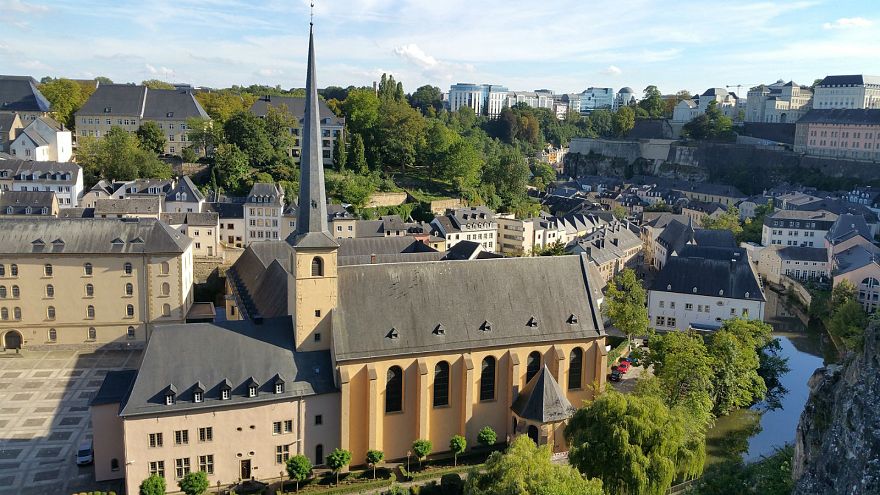
Luxembourg is to become the first country in the world to scrap fares on all public transport.
The plans, introduced by Prime Minister Xavier Bettel's coalition government, will see trains, trams and buses run free of charge from next summer.
 Bettel, (pictured) who took office for a second term on Wednesday, made environmental protection a key part of his election campaign.
His Democratic Party will form a government with the left-wing Socialist Workers’ party and the Greens.
Currently, fares are capped at €2 for anything up to two hours of travel, which covers most journeys in the 2,585 km² nation.
Luxembourg City, the landlocked country's capital, is home to around 107,000 but sees 400,000 commuters cross its borders every day to work, causing some of the worst congestion in Europe.
Part of the cost for the initiative will be footed by removing a tax break for commuters.
Luxembourg has previously shown it has a forward-looking attitude towards transport — over the summer, the government introduced free transport for young people under the age of 20.
Secondary school students are also provided free shuttle services between their places of study and homes.
LA Metro CEO proposes free public transport for all in Los Angeles

Photograph by Kevork Djansezian / Getty Images
Could Congestion Tolls on Roads Mean Free Metro Transport for All?
And, if so, will Angelenos take that deal?
“We think that with congestion pricing done right, we can be the only city in the world to offer free transit service in time for the 2028 Olympics,” Curbed reports Washington said during his presentation to the Metro Board of Directors.
Washington presented three possible approaches to establishing a congestion pricing scheme. Cordon pricing would create a perimeter around a particular location, and charge dynamically fluctuating prices to cross the border. This system, similar to the congestion fees that have been charged to enter central London since 2003, would generate an estimated $12 billion a year, according to Metro. There’s also corridor pricing, which would identify certain high-traffic roads and set up something kind of like the existing Express Lanes system, but which would apply to every lane, not just the express. This plan, which could net $52 billion, would only be used on roads where there is a “viable public transit alternative.”
The third option, which could generate 103.5 billion dollars, would be VMT Pricing. VMT stands for “vehicle miles traveled.” Drivers could go on any route they liked, and an in-car tracking device would log the miles, which could be billed at a flat or dynamic per-mile cost. VMT fee systems have been adopted in a number of European nations, but primarily for commercial truck drivers, rather than passenger cars, though a 2007 pilot study in Oregon deemed the idea of a VMT fee “feasible.”
While it appears to have the greatest upside for Metro’s coffers, rolling out a VMT fee could be the most difficult, as it would require the development and adoption of a technology solution by every participating driver, and questions have been raised over privacy concerns regarding what would be done with all that data being collected. Depending on how it was implemented, it could also only end up charging local drivers who have the on-board device, and not charging visitors in town for something like, say, the Olympics.
"The theory goes that, as driving becomes more expensive, fewer people will choose that as their way to get around, particularly if public transportation alternatives are free and accessible."At the presentation, Washington expressed that the corridor pricing model would be his first choice, and that his idea would be for public transit alternatives to driving to be free of charge, both during the Olympics and indefinitely afterwards, subsidized in part by revenue from the congestion fees.
StreetsBlog L.A. commentator Joe Linton suggests that bringing up the congestion pricing proposal may be something of a negotiating tactic by a cash-strapped Metro that has been asked to speed up a lot of work in time for 2028. “Asked to fund ’28 by 2028,’ Washington turned around and put things back in the board’s lap,” Linton writes. “He basically said if you want acceleration, you have to do something bold. He and his staff then tossed the proverbial bunch of spaghetti on the wall to see what would stick.”
Then again, compared to the other “spaghetti” Washington tossed out, congestion pricing starts to make sense. Other funding options would include requesting federal money, which Donald Trump is against; delaying electric buses, which Mayor Eric Garcetti is against; selling naming rights to stations, which County Supervisor Sheila Kuehl is against; cities handing their Measure M funds over to Metro, which the cities are against; or borrowing more money, which the Metro Board is against.
Finding the budget to cover Olympics-related projects is also only the short-term goal. Congestion pricing could be a stab at some big ideas, including cutting back on pollution to slow climate change and making a meaningful reduction to L.A.’s traffic. The theory goes that, as driving becomes more expensive, fewer people will choose that as their way to get around, particularly if public transportation alternatives are free and accessible.
Thursday, November 1, 2018
The Case for Free Public Transit
The Case for Free Public Transit
Video published 7 July, 2018 by Free Transit Toronto
Just Mobility and Urban Planning The campaign for free public transit is a rapidly growing international movement, with several cities in Canada and many more in the U.S. taking up the effort.
Public transit is crucial to social reproduction, and a crucial linkage between workplace and community struggles (too often neglected by unions and community activists alike). Just mobility in the social provision of transit is central to workers, racialized communities, women, the disabled, youth and seniors – all disproportionately dependent on public transit.
Free public transit is, perhaps, the most immediate step we could take to address climate change and should be at the top of the agenda of the ecology movements (who remain far too entranced by market solutions and the pricing of carbon as policy reforms). It is a demand for decommodification of daily life and it is pivotal to re-orienting urban planning away from car dependence and thus integral to any effort to form ‘rebel cities’ that reclaim urban spaces from endless commercialization, gridlock and pollution, and the concrete barricades partitioning the capitalist and professional classes off from the urban crises of housing, poverty and much else spreading in all directions. Free public transit is at the heart of re-imagining how an anti-capitalist urban politics might be.
This video features the Toronto launch of a unique book, Free Public Transit – And Why We Don’t Pay to Ride Elevators (2018), edited by Judith Dellheim of Berlin’s Rosa Luxemburg Stiftung and Jason Prince of Concordia University in Montreal. It is a collaborative result of an international network of scholars and transit activists working for fare-free public transit.
The book provides an overall analysis of public transportation and describes and discusses various efforts in cities around the world to build movements for decommodified and accessible public transport. Examples include Toronto, Montreal, Bologna, Seattle, New York, Hasselt, Tallinn, Stockholm and others. Public transit is a need and a social right. Demand free fares.
The launch featured a discussion about the promises, challenges and social underpinnings of free public transit. Moderated by Taraneh Zarin. Presentations by:
* Jason Prince: co-editor of the book, teaches at Concordia University, and is a Montreal based urban planner
* Herman Rosenfeld: chapter author in the book, transit activist in Toronto
* Sabrina ‘Butterfly’ GoPaul: Jane Finch Action Against Poverty (JFAAP)
* Shelagh Pizey-Allen: executive director of TTC riders
Recorded in Toronto, 21 June 2018
This innovative French city has made public transport free.
VIDEO BY WORLD ECONOMY, Published on Oct 24, 2018
This Innovative French city has made public transport free.
Wednesday, October 17, 2018
'I leave the car at home': how free buses are
revolutionising one French city
One month after the
French channel port of Dunkirk introduced free public transport for all, a
small revolution is taking place.
By Kim
Willsher, The Guardian, in
Dunkirk, 15 October 2018

The free bus service in Dunkirk was initially offered on weekends and
national holidays but was extended a month ago to operate every day. Photo:
Francois Lo Presti/AFP/Getty Images
Dunkirk is a month into a
project that makes it the biggest European city to offer entirely free public
transport to residents and visitors alike. So what do people think?
Two women, perfect strangers until now, are chatting across
the aisle about nothing in particular. One admits she sometimes takes the bus
“just for the fun of it”. A young man wearing headphones is charging his mobile
in a socket just above the “request stop” button.
On another bus, Claude
Pointart, 65, who is retired, says free buses mean her pension goes
further. “I’m saving money and they come every 10 minutes so I don’t have to
wait long. But there’s a lot more people taking the bus so you have to avoid
the rush hour if you want to sit. Still, I think it’s a good thing.”

Claude Pointart, a passenger on a Dunkirk bus. Photo: Emmanuelle Depecker
On a city bus making its way around the historic port city,
passengers smile at the driver and say “Bonjour” as they board. Some of the
city’s fleet of new buses, painted in dazzling colours – pink, orange, green,
yellow and blue, with upholstery to match – have wifi. The urban authorities
have plans for debates, music and possibly the occasional celebrity on board. A
“Sport-Bus” with an interactive game, quiz screen and a selfie camera is
already in operation.
Georges Contamin,
51, says he has reconsidered how he travels about the city since the buses
became fare-free. “Before, I almost never took the bus, but the fact they are
now free as well as the increase in the cost of car fuel has made me reflect on
how I get about,” Contamin says: I never used the bus before. It was too much
bother getting tickets or a pass.
Marie, passenger: 'It's so easy'
At the bus stop opposite the port, even the persistent
drizzle and howling wind rocking the boats cannot dampen Marie’s enthusiasm. “I never used the bus before,” she says. “It
was too much bother getting tickets or a pass. Now I leave the car at home and
take the bus to and from work. It’s so easy.”
One month ago, Dunkirk – with a metropolitan population of
200,000 – became the largest city in Europe to offer
free public transport. There are no trams, trolleybuses or local commuter
trains, but the hop-on-hop-off buses are accessible and free – requiring no
tickets, passes or cards – for all passengers, even visitors .
The scheme took its inspiration from Tallinn in Estonia,
which in 2013 became
the first European capital to offer a fare-free service on buses,
trams and trolleybuses, but only to residents who are registered with the
municipality. They pay €2 for a “green card”,
after which all journeys are free. The city has reported an increase of 25,000
in the number of registered residents – the number previously stood at 416,000
– for which the local authorities receives €1,000 of each resident’s income tax
every year.

Residents of Tallin in Estonia pay €2 for a green card which gives them
free access to buses, trams and trolleybuses. Photo: STRINGER/EPA
Free urban transport is spreading. In his research Wojciech Keblowski, an expert on urban
research at Brussels Free University, says that in 2017 there were
99 fare-free public transport networks around the world: 57 in Europe, 27 in
North America, 11 in South America, 3 in China and one in Australia. Many are
smaller than Dunkirk and offer free transit limited to certain times, routes
and people.
In February this year, Germany
announced it was planning to trial free public transport in five
cities – including the former capital Bonn and industrial cities Essen and
Mannheim. In
June this was downgraded to a slashing of public transport fares to
persuade people to ditch cars.
The largest in the world is in
Changning , in
China’s Hunan province,
where free transit has been in operation since 2008. Passenger numbers
reportedly jumped by 60% on the day it was introduced.
A study into free public transport by online journal Metropolitics
found an increase in mobility among older and younger people, and an increased
sense of freedom.
France
Niort in west France introduced
free buses for its 125,000 residents a year ago. Like Dunkirk, its income from
fares was around 10%. The city authorities say passenger numbers have been
boosted by 130% on some routes.
One month on, the Dunkirk
mayor, Patrice Vergriete, who promised free public transport in his 2014
election campaign, says the project has been an overwhelming success, with a
50% increase in passenger numbers on some routes, and up to 85% on others.
Sitting in his large office under a poster of Nelson
Mandela, Vergriete claims it is a win-win measure for his home city, where
previously 65% of trips were made by car, 5% by bus and 1% by bicycle. The
other 29% walked.
“The subject of free public transport is full of dogma and
prejudice and not much research. This dogma suggests that if something is free
it has no value. We hear this all the time in France,” he says.

Free public transport for Dunkirk was a key promise of Mayor Patrice Vergriete’s
2014 electoral campaign. Photo: youaintseenme/Getty Images/iStockphoto
Money, he says, is the obvious inconvenience. Before the
buses were free, fares raised around 10% of the network’s €47m (£41.6m) annual
running costs. A further 60% was funded by the versement transport, a
French public transport levy on companies and public bodies with more than 11
employees, and 30% came from the local authority. Vergriete says a rise in the
company transport tax has made up the fare shortfall – meaning no rise in taxes
for local households.
Bus routes have been extended, with special lanes and city
centre priority introduced. The fleet has been expanded from 100 to 140 buses,
including new greener vehicles which run on natural gas.
“The increase in passengers since it went free has surprised
us; now we have to keep them. We’re trying to make people look at buses
differently. We have put the bus back into people’s head as a means of
transport, and it has changed attitudes.
It may be that the financial cost is too great, but don’t
underestimate the social advantages. You can’t put a price on mobility and
social justice.
Dunkirk Mayor: ‘You
can’t put a price on mobility and social justice’
“Before, when they paid, it was a service and they were
customers. They may have been only contributing 10% of the cost of running the
service but they thought it was theirs. Now it’s a public service they look at
it differently. They say ‘bonjour’ to the driver, they talk to each other. We
are changing perceptions and transforming the city with more vivre ensemble.
We are reinventing the public space.
“Before the bus was for those who had no choice: the young,
the old, the poor who don’t have cars. Now it’s for everyone.”
Free public transport, however, also has its critics. The
French transport union UTP believes fare-free transport is often “associated in
France with a lack of value and, by extension, a lack of respect”.
Claude
Faucher of the UTP said:
“That it should be free for those passengers with financial difficulties …
could be perhaps justified. However, completely fare-free for all users would,
we believe, deprive [public] transport of resources that are useful and
necessary for development.”
In Paris the income from tickets on public transport is
reported to make up half the running costs. When mayor Anne Hidalgo suggested
she would look at scrapping fares, Frédéric Héran, a transport economist, said
the measure “made no sense”.
“Who will the new public transport users be?” he asked. “All
studies have shown they will be cyclists, then pedestrians and very few
motorists. This clearly shows it’s an anti-cycling, anti-pedestrian measure and
not very discouraging to cars.”
Vergriete
believes this is all part of an erroneous received dogma. He admits free public
transport may not work everywhere, but says that, as well as being good for the
environment, it is a social measure, a gesture of “solidarity” and promotes a
more egalitarian redistribution of wealth than tax cuts.
“We have been
pragmatic: we looked at the advantages of free transport and weighed them
against the disadvantages and decided €7m is not a lot to pay for all the
benefits.
If I can pass one message to other mayors it’s to fight the
dogma. Put the advantages and disadvantages on the table and consider it
realistically. It may be that the financial cost is too great, but don’t
underestimate the social advantages. You
can’t put a price on mobility and social justice.”

Passengers wait on a Paris metro platform. Photo: Alamy Stock Photo
This Guardian article has been reprinted
by FareFree New Zealand, October 2018. [Slightly abridged]
For more information on Free
Public Transport, go to: http://farefreenz.blogspot.com
Email the editor:
roger.fowler@icloud.com
Subscribe to:
Comments (Atom)